The compliance gap between a demo and a deployment
The distance from “it works on stage” to “it is legal on your floor”.
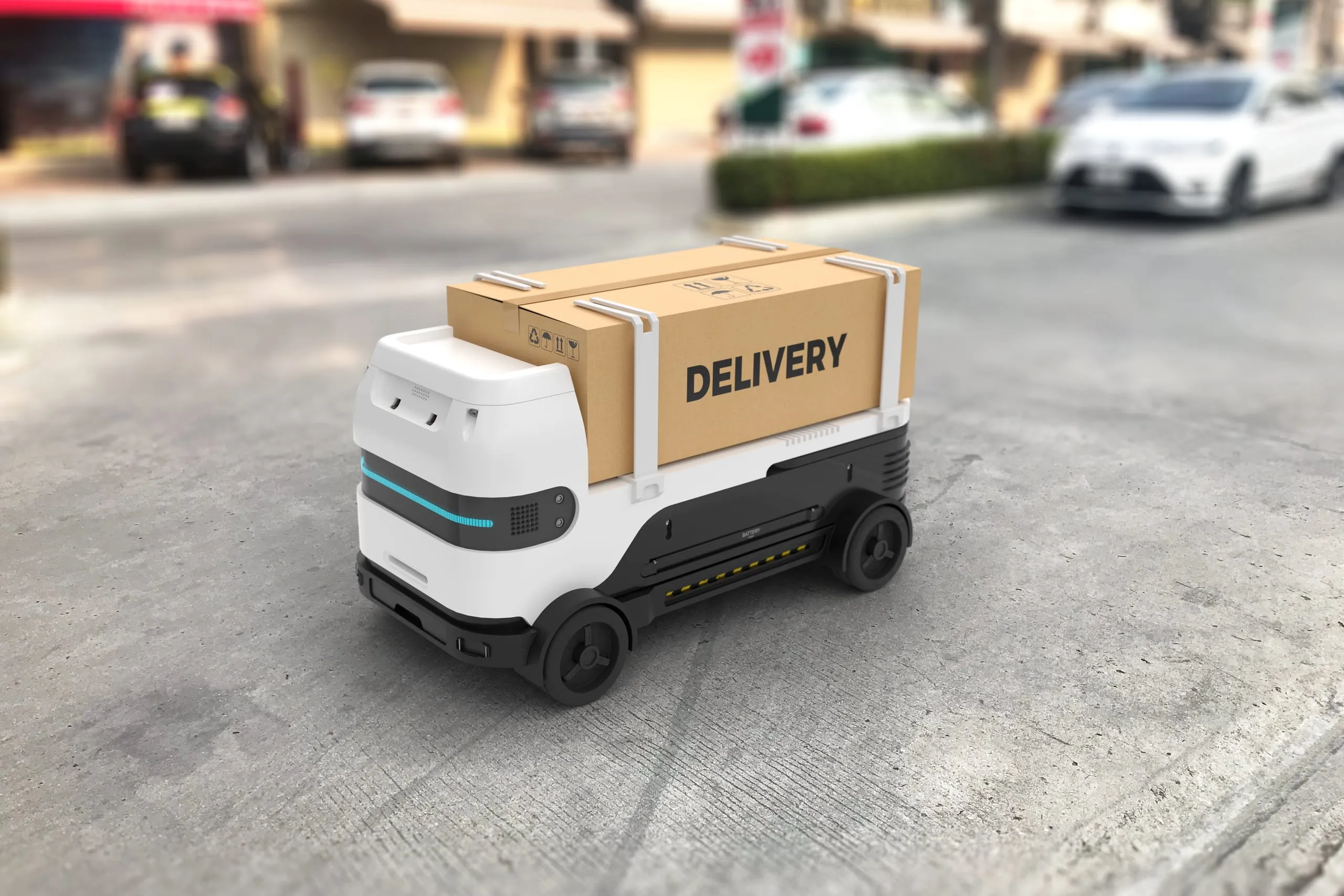
Choosing from the operator’s side, not the brochure’s.
An AGV follows a line painted on the floor. An AMR reads the floor for itself. The difference sounds academic until the layout changes on a Tuesday and only one of them keeps moving.
A fixed-route vehicle trades flexibility for certainty: the path is known, the safety case is simpler to write, and the cost per unit tends to sit lower. A free-navigation machine trades that certainty for adaptability, reading the space with sensors rather than magnets or tape, and re-routing itself around a stray pallet or a closed aisle.
Neither is the better machine in the abstract. The right answer depends on how often the floor itself changes, and how much that change costs to plan for in advance.
“The mistake is comparing AGV and AMR like two versions of the same product. They are two answers to a different question: how much does your floor change, and how much are you willing to pay to ignore that.”
Fixed infrastructure earns its cost back where the layout is settled and the volume is predictable.
On a stable pick line or a repeating pallet route, a guided vehicle’s simplicity becomes an advantage. Certification is more straightforward, maintenance is more predictable, and the safety case does not need to account for a machine improvising its own path.
Where throughput is high and the layout rarely moves, that predictability compounds. A fixed-route fleet that keeps doing exactly the same job, correctly, is often the cheaper and calmer choice.
WHAT TO TAKE AWAY
Start from the floor, not the fleet — how often does the layout actually change.
Fixed routes win on repeatability and a simpler safety case.
Free navigation earns its keep where the layout is genuinely dynamic.
The honest shortlist compares floors, not spec sheets.
Free navigation earns its premium where the floor itself is the variable.
A multi-zone site, a facility shared with pedestrians, or a layout that shifts by season all favour a machine that can read its surroundings rather than follow a fixed instruction. An AMR re-plans around an obstacle instead of stopping and waiting for a person to clear it.
That flexibility has a cost — more sensing, more computation, a longer conversation with a notified body. It is worth paying for a genuinely variable floor, and worth avoiding on a floor that does not need it.
EDITORIAL RULE
Sourced or silent. Every figure on this page carries an attributed, dated source. Where we could not source a number, we left it out rather than estimate it.
SOURCES

A QUESTION
One person answers — from the first email to the room.
nh_alliance

The distance from “it works on stage” to “it is legal on your floor”.
The case for building a business around everything except the robot.

What the national automation targets mean on the ground.